
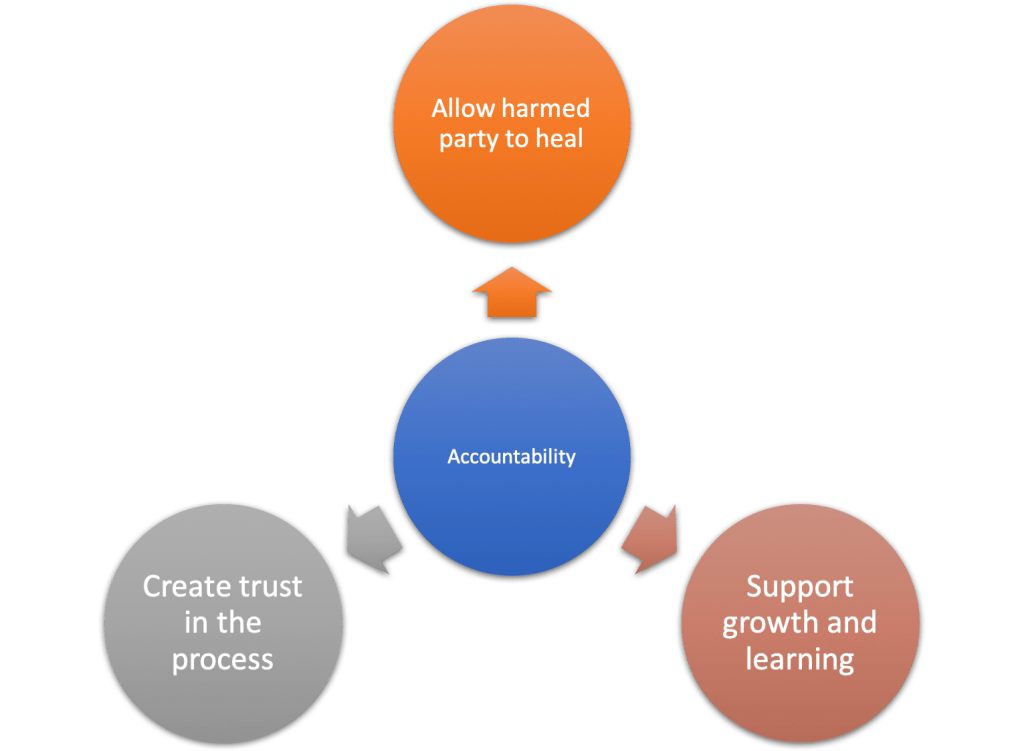
Before you create an accountability plan for yourself, it is important to understand what the goals of such a plan are. Going through an accountability process when you’ve been told you harmed someone serves many different purposes simultaneously. You can help the person harmed, yourself, and your community.
Accountability processes are intended to remove the burden of accountability from the person harmed, so they can focus on their own healing.
Accountability processes also exists to support the person doing the accountability as they learn and grow and do better. It helps them understand the harm they’ve caused and offers valuable feedback from people who are ideally clear sighted in being able to see the good in the person while also able to compassionately call out areas where there needs to be more awareness. It gives them the emotional support they need as they confront complicated feelings that often arise, so they can be moved on from and focus on taking real accountability, growth, and learning. The support offered by the process helps processing negative emotions and lead to the point where freedom is found by embracing introspection and change.
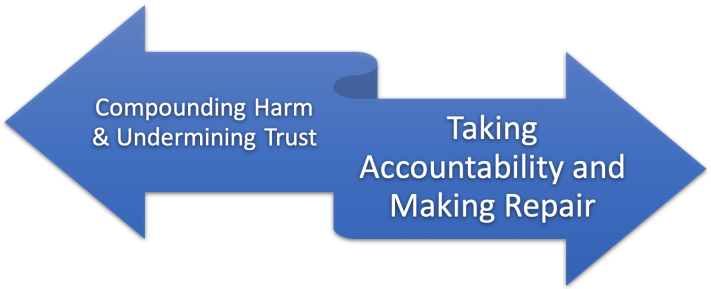
At its core, accountability is acknowledging your actions and fully understanding their impact, moving past negative feelings and into a mindset focused on growth, honestly apologizing, making amends and repairs, learning the root causes of your actions and what could have been different, updating your practices, dedicating yourself to aligning your actions and values, and accepting the consequences of your actions.
By undertaking accountability, you are working to rebuild trust with friends, loved ones, and your community; promote healing; help find a path forward for all involved; to help everyone feel safe coming forward if they are harmed.
There are no guarantees with accountability processes. Going through one does not mean people have to trust you again. It doesn’t mean you are no longer under scrutiny. It doesn’t mean you will be welcomed back to everywhere you used to go. It doesn’t mean you get to do all the things you used to do as if nothing happened. It does not erase the past, nor is a cure-all for harm done. It is not exoneration, it is taking responsibility.
Also, and importantly, an accountability process does not make decisions for people, groups, or venues. Accountability processes are about the personal growth. Decisions about being welcomed to groups or events belong solely to those entities.
As you start to build a plan, consider what the goals of the plan are. They might include things like:
- Finding out if there are other incidents
- Determining patterns of thought or behavior that are detrimental to you and those you are involved with
- Educating yourself on what you can do different or better
- Understand the experience of others
- Determine guidelines and guardrails for yourself that will support your good intentions.
Taking responsibility will free the person harmed to focus on their healing, guide you to do better in the future, honor the faith put in you by family and friends who are supporting you, makes your community safer by taking the situation seriously, and contributes to a culture of accountability that will help others in the community in the future.
 Accountability Paths