
When we have transgressed badly enough that a clearing conversation and apology isn’t going to do be enough on their own (note: it doesn’t matter if you think that should be enough. The level of harm is decided by the person harmed and their experience, and to a degree by your community as well), it’s time to commit to making an accountability process for yourself, or you are helping someone else make one for themselves, you have a lot to consider.
Who is going to be helping?
The fact that accountability is needed is because something was missed. Something went wrong and you either didn’t see it at the time or didn’t anticipate things happening as they did, and there’s a reason that happened. So it’s really important to have others involved to broaden your perspective, provide a insight, change your thought process, and help you dig deeper to see what it is your missed and what will be effective ways to stop that from happening the future. This is sometimes called an accountability pod, but the name matters a lot less that the intent. These are people you ask to support you and help you do better. This isn’t a failing. No one is perfect, no one is going to see everything all of the time.
Look for people who are going to be honest with you, who are going to challenge you. You don’t need people patting you on the back; you need people who can be honest with you about everything. This probably shouldn’t be a romantic partner (or a partner/ex-partner of the person harmed). There has to be confidence that the people chosen are not just there for appearances. They can be friends, but choose wisely and think about how someone on the outside will view the choices you make.
Remember they are doing labor for you. Take the process seriously or it just wasting the time of people who are sticking their necks out to help you. Commit to the process. Follow through on your promises. Prioritize the process.
Anywhere from 2-5 people is likely a good number. A single person is going to have limited perspective to share. Too many makes everything unwieldy. A group that can effectively have discussions amongst themselves and with you, come to agreements, and work together efficiently is imperative. Choose one person to lead the process. They will write up the plan, manage the time line, organize discussions, distill information gathered in other steps, and generally make sure the process stays on track. They should meet independently with the other people helping so that everyone knows their role, the plan, and commits to the process.
Everyone helping with the process is important. They will be helping to keep things moving, finding patterns, challenging thought processes, being a confidant, a sounding board, a support. Choosing the right people is imperative.
Initial Steps
The first thing is to immediately try and mitigate the harm as much as possible. There is a lot of variability in how that might look. The severity of the offense, the kind of community you are in, whether you are in a position of authority, the relationship with the harmed person, all can play into these decisions.
Some examples (and this is not an exhaustive list) might include:
- Stepping back from events the harmed person frequents so they are not excluded because they don’t feel comfortable being around you right now
- Stepping away from positions where you might influence the response of groups, venues, and organizations that may need to make decisions about you.
- Letting your community know about what’s going on so they can make informed decisions about their association with you or limits they want to put on their interactions with you.
- Offering (directly or through your pod as is appropriate) a healing conversation to the harmed party with a neutral, professional mediator at your expense.
Create a timeline
Work with those who will helping you to create a timeline for your process. This is often a multi-month process so that it can account for all the pieces and give them adequate time to play out. You can’t do everything at once, but laying out some major milestones like soliciting feedback, initial discussions, etc, can be helpful. There are dependencies and limited bandwidth for everyone involved, so setting a specific end date may not prudent: the process will take however long it takes. A lower level infraction may need a month or two. High level violations may need a year or more. Remember the goal isn’t to get back to normal as quickly as possible. The goal is to give yourself the time to do the work, the person harmed time to heal, and your community time to trust. You don’t need to have a specific dates on things, and things may need to be extended if more comes up that needs to be discussed and walked through. Don’t rush the process. But do create a set of milestones that you are working toward accomplishing and have in mind some general idea of how long those are likely to take as a starting point.
Identify Stakeholders
Think about who is invested in how your accountability process progresses. The harmed party of course (although they may not want any further involvement, and thats perfectly ok), but there are others. Partners, friends, groups you associate with in whatever capacity, maybe even the community at large. These are the people who will be interested in what you are learning or changing so they can decide how they wish to engage with you in the future. Having stakeholders in mind can help you decide other details such as how and how often you will be communicating progress and when the process can come to a conclusion.
Solicit feedback
You can’t be absolutely sure the mistake you made only happened once, or was the only kind of mistake you’ve made. Create a way that people can share their experiences with you (a google form or something similar is a great way to do this). Importantly, this should be anonymous if they desire. The means that you won’t be the one receiving this information and should have no access to it in its raw form. This will allow people to speak more freely and make them feel more comfortable coming forward.
Make a list of other people you interact with in a similar capacity to the person harmed (ex-partners, people who work with you in a similar capacity, etc), and your pod lead can reach out to them directly to see if they have any feedback they want to share with a promise of confidentiality.
Your accountability lead will receive all of this information, distill and remove direct and indirect identifying details, discuss with the other people helping you. They will all work together to identify patterns and blindspots so they can then present their findings to you.
Some feedback may desire/require repair work be done for them. Beyond apologies and identifying themes and patterns to do better on, you may be well served to offer mediated conversations. Identifying a neutral professional who can help with such discussions can be a really useful thing, and can be explicitly offered when soliciting feedback.
Education
There is a lot of ways you can educate yourself using the information your pod and your own introspection. Read books on relevant topics, attend classes, attend therapy, engage with a professional coach who specializing in helping people overcome transgression. You may not have all these answers up front when creating your process, but build the space for it into your process. The education you decide on and what you learn from it will be part of your updates later in the timeline.
Ongoing Discussions & Reports
You and your pod should be talking. Likely, you’ll be talking informally about what you are doing and learning frequently, but it’s a good idea to set aside more formal discussions from time to time. Your pod needs to meet so they all understand the process, and they all need to meet with you at the beginning of the process so everyone can share their thoughts right off the bat. You also need to meet once the initial feedback has been gathered so they can share what they found and what they think about it. Plan further communication to share your insights and ah-ha moments as you take part in education and introspection. And of course, one more discussion at the end to review a final summary of your process and progress.
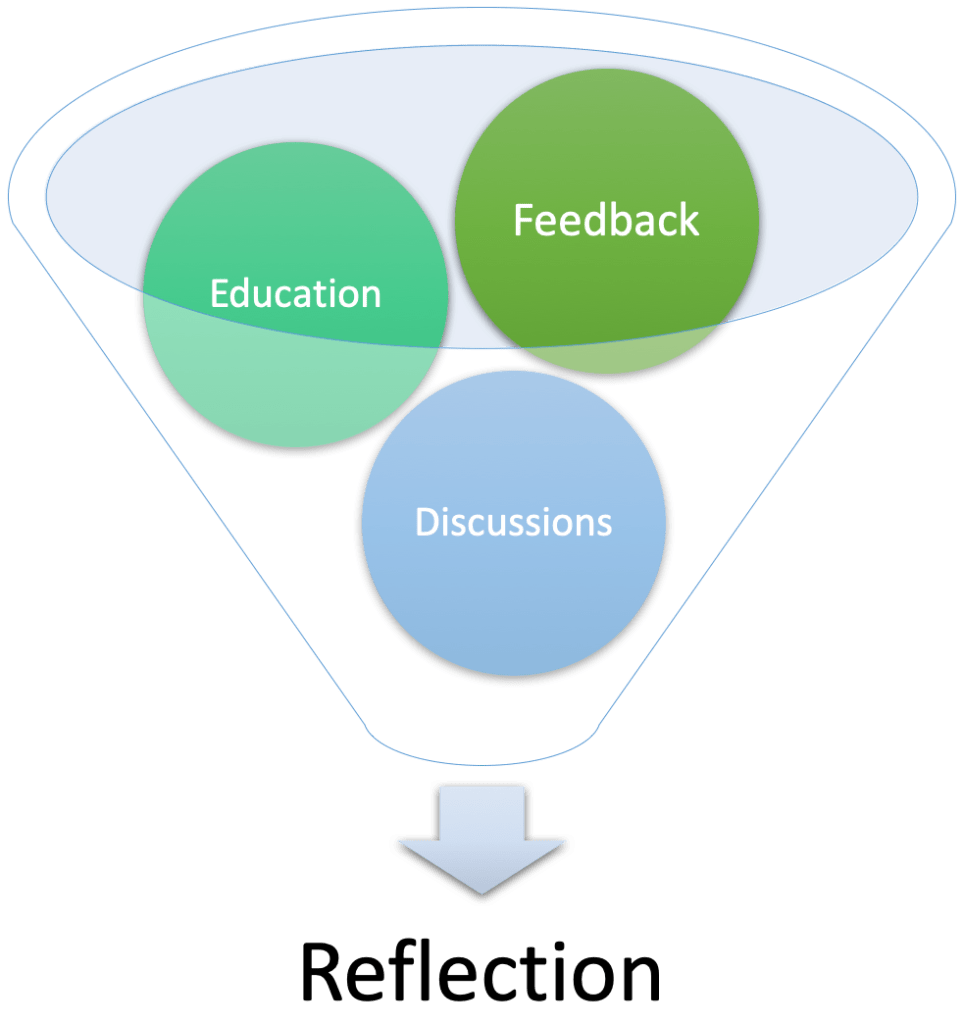
Remember, this is about your journey of introspection and self discovery. It’s not a list of pre-determined things you need to check off a list. Your pods job is to bring attention to the things you need to think about that you may not be seeing. Their job is challenge your thinking and encourage you to widen your view. Your job is to do the reflection, seek education, reflect, and discuss with your pod what you are thinking and learning.
As you take part in these discussions, consider how you may communicate your progress to those who have a stake in your successful completion of your process and include that in your plan.
Final report
At the end of your process your pod will work with you and the others helping you to create a final report that can be presented to stakeholders and/or your community.
Put It Together
Put this all together into a coherent plan: one that is easy for you to follow and easy for outsiders to understand. There’s a lot here, but as as bullet-point timeline, it will give you, the person you harmed, and your community an easy to follow guide to what you will be doing and a way to make sure you do those things.
 Accountability Paths